The Silent Truths of the HeartCardiovascular Risk and Preventive Approaches in the Modern Era
Our heart…
A silent engine that carries the rhythm of our lives without stopping for a lifetime. Unfortunately, modern life places more strain on this engine than ever before. Stress, work pressure, urban living, lack of sleep, poor nutrition… Everything accumulates, and at some point, that invisible burden we call “risk” emerges.
In this article, I would like to share with you a perspective distilled from my daily clinical practice as a cardiologist, current guidelines, and the new-generation understanding of preventive cardiology—focusing on cardiovascular risk analysis and strategies for protecting heart health.
Risk Analysis Is No Longer Just a Number: It Is a Roadmap
In the past, risk analysis consisted of a few numbers:
What is the cholesterol level?
How high is the blood pressure?
Is there smoking or not?
Today, things are far more complex.
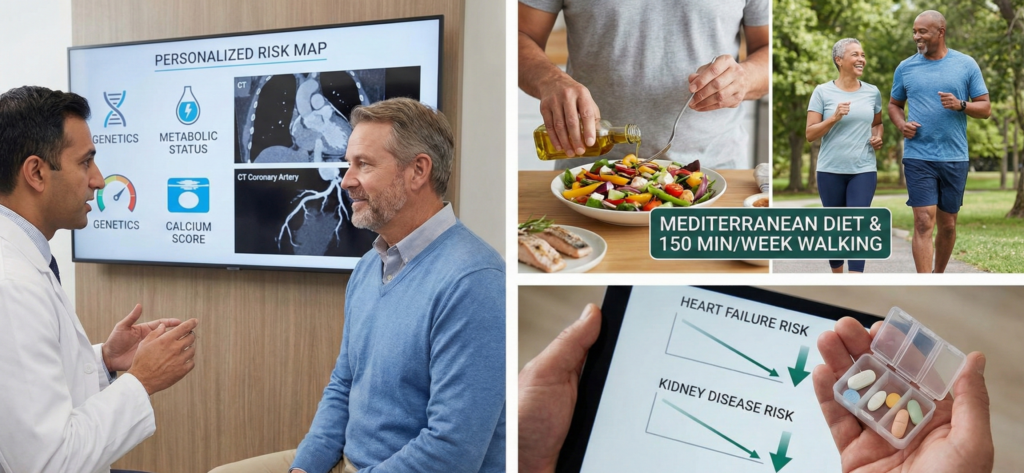
New risk models—particularly SCORE2—take into account not only these basic parameters, but also the country’s baseline risk level, genetic predisposition, metabolic status, and when necessary, even calcium accumulation in the arterial wall.
In other words, risk analysis is no longer a score; it is a personalized health map.
For someone with no symptoms who asks, “Do I have any risk?”, sometimes an ECG, sometimes an echocardiogram, sometimes an exercise test, and sometimes a single CT image can tell the entire story.
However, some diagnostic tests also have drawbacks. For example, tomographic or scintigraphic methods are not only costly, but the radiation exposure, contrast agents or medications administered intravenously, and differences in reporting experience can negatively affect the outcome.
The Power of Lifestyle: The Oldest Yet Most Effective Treatment
Let’s be clear about this:
No matter how advanced modern medicine becomes, no medication can replace a healthy lifestyle.
- 150 minutes of walking per week
- Mediterranean-style nutrition
- Complete avoidance of all forms of tobacco
- Quality sleep
- Stress management
I know these may sound like clichés. My patients often say, “Doctor, we already know this.” But the issue is not knowing—it is applying. And the heart scores you based on what you do.
Even small changes can make a big difference.
Adding just 30 minutes of walking a day can wipe out years of accumulated risk.
Modern Medications: No Longer Just Treating Symptoms, but Blocking Risk Pathways
One of the most exciting developments in cardiology in recent years has been the discovery that certain diabetes medications can also protect the heart. SGLT2 inhibitors and GLP-1 receptor agonists are the best examples.
These medications do more than lower blood glucose:
- They reduce the risk of heart failure
- Protect kidney function
- Decrease cardiovascular events
A similar transformation has occurred in cholesterol management.
In the past, saying “your cholesterol is high” was sufficient; now we discuss how low it should be lowered based on the individual’s risk profile. In high-risk individuals, keeping LDL cholesterol as low as possible has become a standard approach.
The era of “less medication, more impact” is over;
We are now in the era of “the right medication for the right level of risk.”
Preventive Cardiology Is Incomplete Without Public Health
No matter how important individual measures are, fighting heart disease without building a healthy society is not possible.
Less salt, less tobacco, more walkable cities, more green spaces, safer food policies…
A nation’s heart health is, in fact, a silent indicator of its overall quality of life.
Today, cardiovascular risk analysis is smarter, more personalized, and more effective than ever before. With early diagnosis, accurate assessment, appropriate lifestyle changes, and modern medications, heart disease has largely become a preventable process.
My recommendation is simple:
Check your heart the way you occasionally check in on yourself.
Know your risk.
Optimize your lifestyle for your heart.
Every step you take for your heart shapes your future.
