
Pregnancy and Hypertension
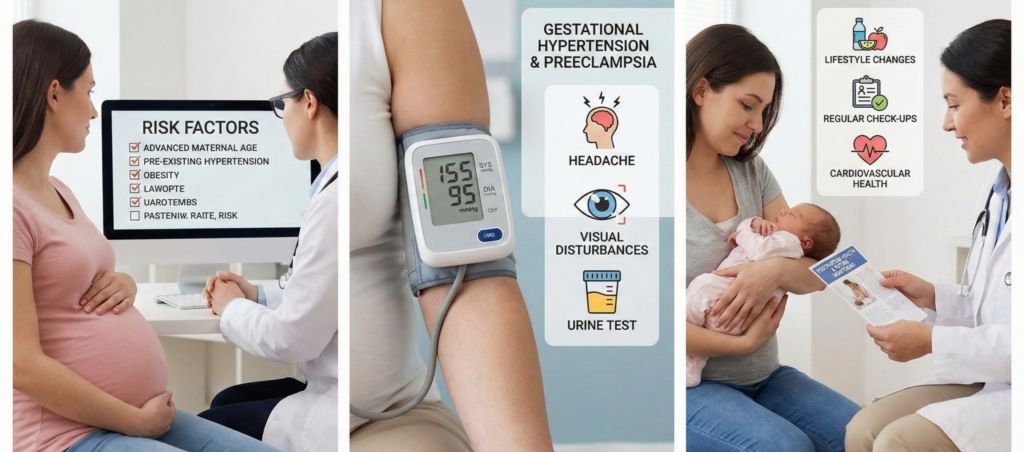
Hypertension is a major risk factor for ischemic and hemorrhagic stroke, myocardial infarction, heart failure, and chronic kidney disease in mothers. Although the number of pregnancies is decreasing in both developed and developing societies, maternal age is increasing. It is the second most common cause of maternal mortality in developed countries. From a fetal perspective, it is one of the most preventable causes of prematurity-related morbidity and mortality. In underdeveloped and developing countries, 10–15% of maternal deaths are associated with preeclampsia and eclampsia.
For diagnosis in pregnancy, systolic blood pressure (SBP) ≥140 mmHg or diastolic blood pressure (DBP) ≥90 mmHg is used. Unlike in non-pregnant adults, hypertension in pregnancy is classified as mild (140–159/90–109 mmHg) or severe (≥160/110 mmHg).
Chronic Hypertension
Hypertension that exists before pregnancy, develops before the 20th week of gestation, and persists beyond the 42nd day postpartum is defined as chronic hypertension. It occurs in 1–5% of pregnancies and is associated with increased complications (approximately 15%).
Gestational Hypertension
Gestational hypertension is hypertension that develops after the 20th week of pregnancy and resolves within 42 days after delivery. The mechanism involves a greater increase in cardiac output than in normal pregnancy, marked vasoconstriction, and increased central and peripheral sympathetic activity.
Preeclampsia
Preeclampsia is defined as the presence of gestational hypertension accompanied by proteinuria of 0.3 g/day or more. In addition to elevated blood pressure, symptoms may include headache, visual disturbances, abdominal pain, pulmonary edema, thrombocytopenia, and abnormal liver tests.
When convulsions accompany this condition, it is called eclampsia.
HELLP syndrome (Hemolysis, Elevated Liver enzymes, and Low Platelets) is the most severe clinical presentation seen during pregnancy.
Risk Factors
Pre-pregnancy risk factors for hypertensive disorders include:
- Advanced maternal age
- High blood pressure
- Dyslipidemia
- Obesity
- Positive family history
- Antiphospholipid syndrome
- Glucose intolerance
Hypertension is reported to complicate 8–10% of all pregnancies.
Risk factors during pregnancy include:
- Young nulliparous women and pregnancies over age 35
- Polyhydramnios
- Multiple pregnancies
- High parity (especially after the fourth pregnancy)
- Diabetes mellitus
- Chronic hypertension
- Malnutrition
- Molar pregnancy and hyperactivity of trophoblastic tissue
Treatment of Hypertension in Pregnancy
Women with mild to moderate hypertension (140–160/90–109 mmHg) are at low risk for cardiovascular complications during pregnancy. Those with preexisting hypertension may discontinue their medications during the first half of pregnancy due to the physiological drop in blood pressure.
For pregnant women with SBP 140–150 mmHg or DBP 90–99 mmHg, non-pharmacological management may be considered.
The European Society of Cardiology (ESC) recommends initiating antihypertensive therapy when SBP is 150 mmHg and DBP is 95 mmHg.
An SBP ≥170 mmHg and DBP ≥110 mmHg in pregnancy requires urgent evaluation and hospitalization.
Although chronic hypertension is directly linked to the development of gestational hypertension and preeclampsia, strict salt restriction has little benefit in treating gestational hypertension. Severe salt restriction is not necessary to prevent gestational hypertension or preeclampsia. However, maintaining normal dietary salt intake is important for non–pregnancy-related hypertension.
Daily 1 gram calcium supplementation has been shown to reduce the risk of preeclampsia by half.
Low-dose aspirin (75–100 mg/day) is recommended before the 28th week of pregnancy for women with a history of preeclampsia.
Weight loss is not recommended during pregnancy for obese women. Recommended weight gain for pregnant women according to BMI categories:
- Normal BMI (<25 kg/m²): 11.2–15.9 kg
- Overweight (BMI 25.0–29.9 kg/m²): 6.8–11.2 kg
- Obese (BMI ≥30 kg/m²): less than 6.8 kg
Antihypertensive medications should be prescribed by a physician, and regular follow-up appointments are essential.
In preeclampsia, the only definitive treatment is termination of pregnancy.
Hypertensive disorders during pregnancy are known to represent a significant risk factor for future cardiovascular disease in women. Therefore, after delivery, lifestyle modifications and regular monitoring of blood pressure and metabolic markers are recommended to reduce cardiovascular risk and prevent complications in future pregnancies.
