
A Virus Everyone Should Know: RSV and Its Vaccine
In recent months, there has been a noticeable increase in the number of patients experiencing upper respiratory tract infections.
With the onset of colder weather, common viral infections such as the flu and the common cold have become more widespread. In addition, illnesses caused by RSV (Respiratory Syncytial Virus) are increasingly seen in the community. RSV can cause serious respiratory problems, particularly in infants, young children, older adults, and individuals with chronic conditions.
For this reason, raising awareness at both individual and societal levels, understanding proper preventive measures, and ensuring early diagnosis and effective treatment are of great importance.
Respiratory Syncytial Virus (RSV) was first discovered in 1956 when researchers isolated a virus from a group of chimpanzees suffering from respiratory disease. They named it the chimpanzee coryza agent (CCA). In 1957, the same virus was identified by Robert M. Chanock in children with respiratory illness.
RSV can cause outbreaks both in the community and in hospital settings. After entering through the eyes or nose, the virus infects the epithelial cells of the upper and lower respiratory tract, leading to inflammation, cell damage, and airway obstruction. Various diagnostic methods are available for identifying RSV, including antigen tests, molecular assays, and viral cultures.
This virus is a significant cause of morbidity and mortality, particularly in older adults, pregnant women, and individuals with underlying chronic diseases.
Among adults aged 60 and above—especially those with COPD, heart failure, or weakened immune systems—RSV causes lower respiratory tract infections that impose a substantial health burden. With the global rise in the elderly population, RSV-related hospitalizations and deaths have become an important public health issue.
The primary preventive measures include handwashing and avoiding close contact with infected individuals. In recent years, newly developed vaccines have revolutionized preventive care against RSV.
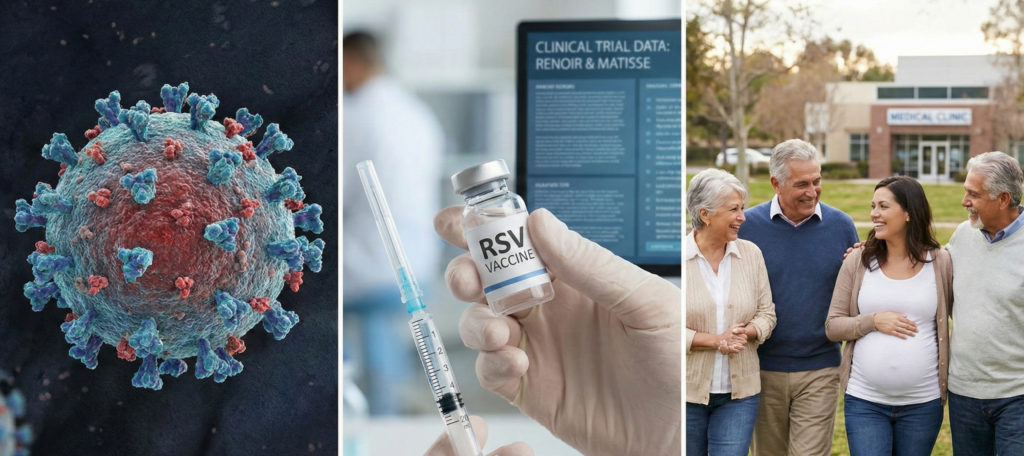
According to clinical efficacy data from the RENOIR Phase 3 trial (NEJM), the vaccine significantly reduced RSV-related lower respiratory tract disease in adults aged 60 and above, with even greater effectiveness in severe cases. Protection continued into the second RSV season after a single dose, with 77.8% efficacy reported for lower respiratory disease with three or more symptoms.
In the MATISSE Phase 3 trial (NEJM), which evaluated vaccination during pregnancy, administration of the vaccine between weeks 32–36 of gestation provided 81.8% protection against severe RSV illness in the first 90 days after birth, and 69.4% protection within 180 days. These results offer strong evidence for passive immunity in newborns. The FDA has also approved its use for high-risk adults aged 18–59 during the 2023–2024 period.
Although the overall safety profile is favorable, cases of Guillain-Barré Syndrome (GBS) have been reported, and the FDA requested a warning to be added to product information in 2025. However, the benefit–risk balance is still considered positive.
According to CDC-ACIP 2024–2025 recommendations, a single dose of the RSV vaccine is routinely recommended for adults aged 75 and older. It is strongly recommended for individuals aged 50–74 who have risk factors. Routine vaccination is not recommended for those aged 60–74 without risk factors.
A single dose administered between weeks 32–36 of pregnancy is strongly recommended to protect the newborn. In high-risk adults aged 18–59, vaccination may be considered on an individual basis within the scope of FDA approval. One dose is sufficient, and booster doses are not currently advised. Receiving the vaccine before the RSV season provides optimal protection.
In patients with COPD and asthma, the RSV vaccine reduces exacerbations, hypoxemia, and pneumonia, thus decreasing the burden on intensive care units. Because RSV-induced hypoxia and inflammation increase the risk of heart failure decompensation and acute coronary syndrome, the vaccine also offers indirect cardioprotective benefits.
From a neurological perspective, the hypoxia triggered by severe respiratory infections is known to increase the risk of stroke and seizures. Therefore, the vaccine contributes indirectly to protecting brain health as well.
In conclusion, the RSV vaccine appears to be a powerful tool in reducing the global disease burden of RSV. International guidelines strongly recommend its use in high-risk populations.
